

When a health emergency hits, the first instinct for health authorities and partners is to get information out fast. And information is most helpful when it answers the questions people are actually asking and addresses their concerns. What have they heard from their neighbours? What have they read online? What are they afraid of? What do they need that nobody has thought to offer?
The World Health Organization (WHO), working with Tsinghua University’s Global Development and Health Communication Center, is helping countries and areas in the WHO Western Pacific Region – including China – to answer those questions before decisions are made, not after. Together they are rolling out BRIDGE – a new set of tools that will let health teams listen to communities in real time and build their responses around what they hear.
BRIDGE stands for Behavioural Research and Intelligence for Directed Guidance in Emergencies. It is the latest addition to WHO’s priority pillar of timely, ethical and effective risk communication and community engagement (RCCE) methodologies.
“Emergencies begin and end in communities. A response has to emerge from listening to communities. Today we start by asking; and what people tell us shapes our response,” said Dr Gina Samaan, WHO Regional Emergency Director for the Western Pacific. “BRIDGE helps countries ground those decisions in evidence about what communities know, believe and need, so that interventions earn trust and save lives.”
Listening at scale, with a little help from AI
Communities are constantly talking: on social media, in surveys, through hotlines, and in conversations with local health workers. Making sense of what is being said used to take considerable time. But WHO now leverages artificial intelligence (AI) to build tools that can sort through those conversations quickly and flag the rumours, fears and gaps in knowledge health teams should know about and act on first.
WHO is rolling these tools out across the Region, particularly in low-resource settings, and is training countries on how to use them so that listening to communities becomes embedded within national emergency responses.
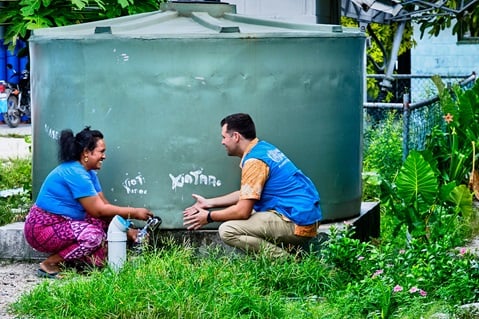
Community-grounded evidence helps everyone in an emergency response – from ministers setting priorities to health workers going door to door. Using this information, leaders can make decisions about how to spend resources where they matter most, and frontline teams can talk to people directly about their concerns.
Trying it out: a dengue outbreak that has not happened (yet)
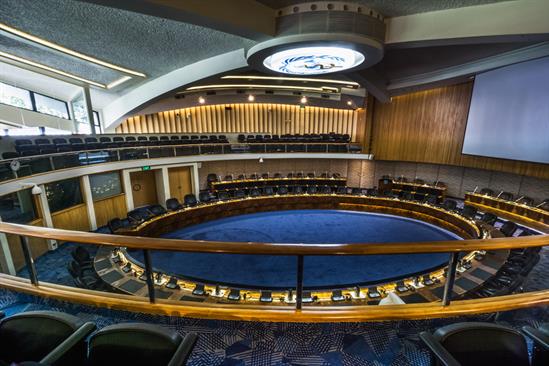
At the Data, Behaviour and Decisions Workshop held during the 5th Global Development and Health Communication Forum at Tsinghua University from 30 to 31 October 2026 in Beijing, representatives from Member States had the opportunity to apply the BRIDGE tools through a simulation exercise. The scenario: a Super El Niño drives a steady rise in dengue-like illness across several countries, and teams have to work out what communities are saying, where the confusion is, and what to do about it.
Practical insights from the simulation were then carried into the Forum, which convened policy-makers, researchers and media partners. Together, they explored how evidence-based information can be translated into response actions through multi-stakeholder collaboration.
“The value of research is ultimately reflected in how knowledge is understood, shared and translated into action,” said Professor Zhou Qing’an, Dean of the School of Journalism and Communication, Tsinghua University. “Connecting academic research with policy and practice, while recognizing the knowledge and lived experiences of local communities, can help ensure that evidence is relevant to people’s needs and contributes to more effective public health responses.”
What it looks like in practice
In the real world, countries are already putting this approach to work. For example, in the Lao People’s Democratic Republic, a dengue awareness campaign built on behavioural science used humour – including a human-sized giant mosquito – to get people’s attention. The campaign reached 68.2% of the country’s Facebook users in 2024, and the share of people “very concerned” about dengue jumped from 21% to 56%. In another example, health teams in the Philippines mapped how information about immunization was spreading, found where misinformation was taking hold, and focused community outreach in those communities.
These two settings were different, but the lesson was the same: people respond when a health awareness and response campaign starts with knowing what communities are thinking and addressing what they need.
Training the people who will do the listening
Tools and shared experiences are most effective when there are people trained to use them, which is where this work connects to the Global Health Emergency Corps. By embedding these community engagement capacities within health systems, WHO gives health teams across the Region a set of tools and coordinated networks - media, academia and civil society organizations - that they can leverage to implement evidence-based interventions during emergencies.
“A strong emergency workforce is not only made up of responders. It includes communicators, behavioural scientists, data analysts and community partners who can work together and use evidence from the first day of a response,” said Dr Thilaka Chinnayah, Programme Area Manager, WHO Health Emergencies Team in the Western Pacific. “This work gives our Member States a common approach to build that capacity and embed it within their health systems.”
Looking ahead
Climate-driven threats like dengue and a range of other health crises arriving faster than ever are exerting growing pressure on health systems. WHO and Tsinghua University will keep supporting countries to listen closely and act on what they hear, so that when the next emergency comes, the people at its centre will help shape the response.
______________________________________
Note to the media:
BRIDGE is supported by the Institute of Philanthropy, the Gates Foundation and the Korea Disease Control and Prevention Agency.
For interviews or additional information, contact:WHO Western Pacific Communications: wprocom@who.int
Tsinghua Global Development and Health Communication Center: thucgdhc@mail.tsinghua.edu.cn